Aberdeenshire Council aiming to improve road safety with major overhaul of speed management
Aberdeenshire Council is conducting a major review of how speed limits are set and managed across the region’s roads, marking a significant step forward in its continuing commitment to improving road safety.
The review will introduce a revised speed management methodology designed to align fully with national policy and recognised professional practice.
It aims to deliver a more consistent, transparent and evidence-based approach to decision-making, while placing a stronger emphasis on reducing risk and improving the experience of local communities.
The council’s current framework brought a structured and consistent system for setting limits across Aberdeenshire. This approach included a commitment to expand 20mph limits in urban areas, while retaining 30mph limits on key strategic routes where appropriate.
It also introduced speed limits based on road type and settlement characteristics, supported by criteria such as frontage development, settlement size, mean vehicle speeds and road hierarchy.
The council’s Infrastructure Services Committee (ISC) heard recently that while this framework has provided clarity and a practical tool for officers, experience in applying it combined with shifts in national policy has highlighted limitations. In particular, the existing approach relies heavily on rule-based decisions derived from road classification and measured speeds, which can result in limits which reflect current driver behaviour rather than shaping it.
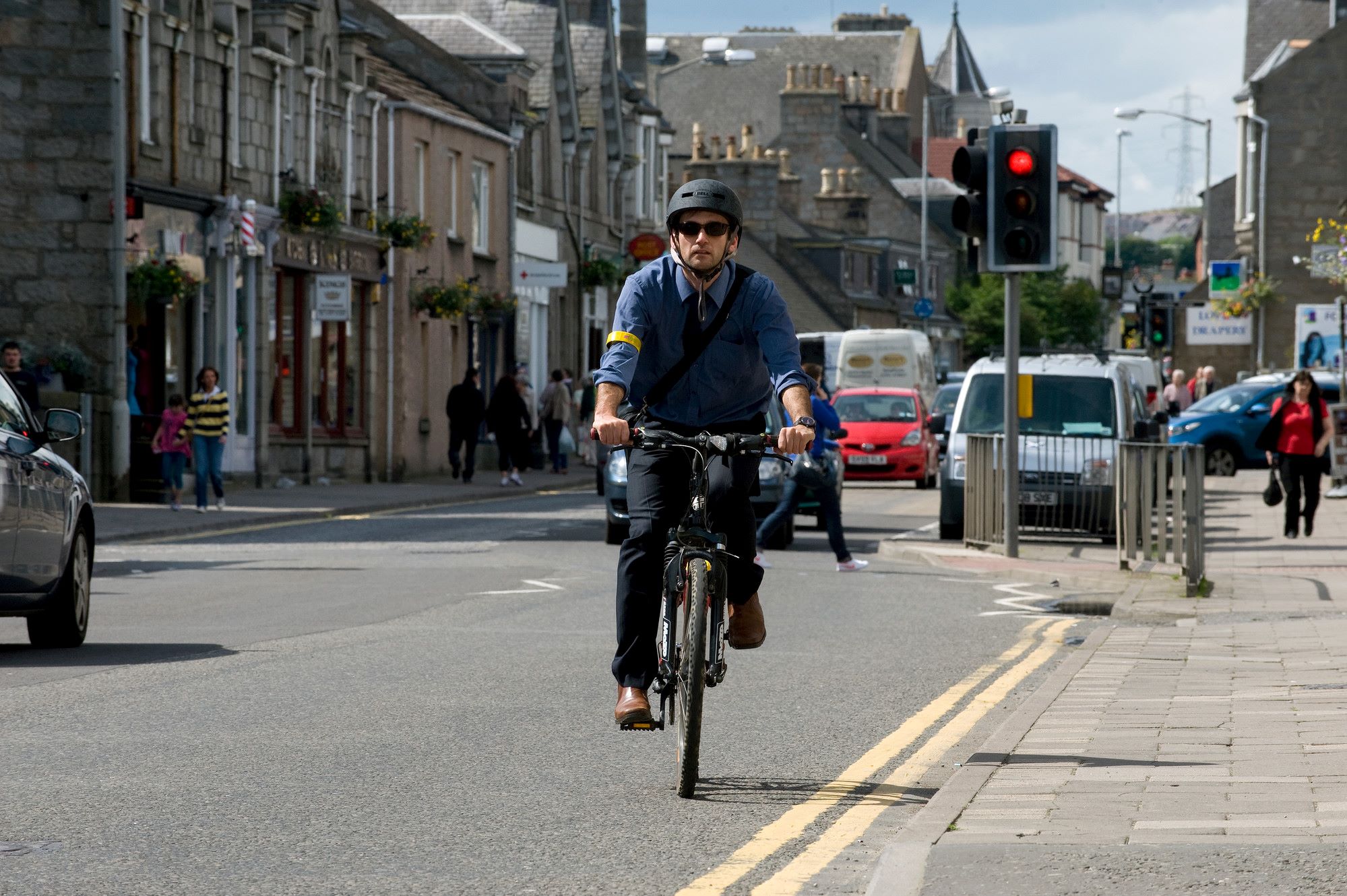
Moving away from that model, the new strategy places risk assessment at its core, meaning decisions will increasingly consider the likelihood of driver error, the severity of potential consequences and the interaction between vehicles and vulnerable road users such as pedestrians and cyclists.
A key change is a reduced reliance on mean vehicle speeds as a determining factor, with the new approach aligning with the Scottish Government’s Safe System principles, ensuring speed limits are set to minimise the risk of fatal and serious injury, actively influence driver behaviour and address the consequences of collisions.
The review also introduces a stronger ‘place-based’ perspective, so while traditional engineering factors such as road classification and traffic function remain important, they will now be complemented by a structured assessment of how streets are experienced by communities.
This includes considerations such as pedestrian movement, community severance, delay, street amenity and perceptions of safety and comfort. This marks a significant evolution in how speed management is approached, balancing the need to move traffic efficiently with the importance of creating safer, more welcoming environments for people.
ISC chair Cllr Alan Turner said afterwards: “The new framework we are developing will provide greater flexibility, recognising that roads of a similar category may require different speed limits depending on local context. It will encourage the use of supporting measures where signage alone may not be sufficient to influence driver behaviour, allowing for more tailored and locally appropriate solutions.
“Importantly, the revised methodology will place a stronger emphasis on vulnerable road users. By aligning road safety, transport planning and place-making into a single coherent framework, Aberdeenshire Council is setting a new standard for speed management. The review will ensure future decisions are not only technically robust, but also responsive to the needs of residents and road users.”
The existing approach relies heavily on rule-based decisions derived from road classification and measured speeds