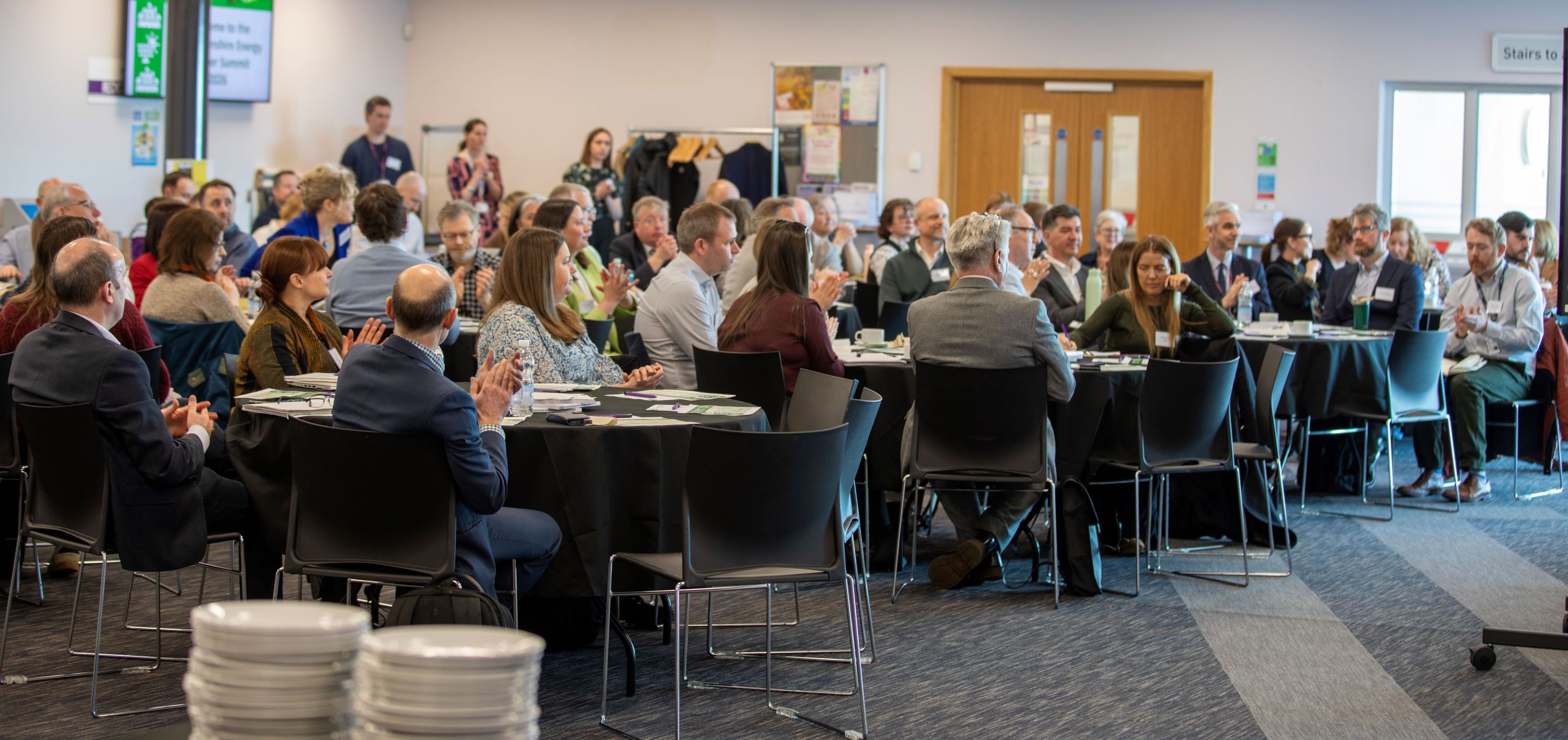
Aberdeenshire Energy Development Charter Summit generates strong industry engagement
Aberdeenshire Council has successfully hosted its inaugural Energy Development Charter Summit, marking a significant step towards increasing engagement with the energy sector and maximising socio‑economic benefits for local communities.
Supported by the North East Scotland College (NESCOL) and Skills Development Scotland (SDS), the well-attended summit brought together energy developers from across the onshore and offshore wind, transmission, hydrogen and gas sectors.
More than 70 participants attended the event with attendees from projects at every stage of development, from pre‑planning through to operation.
Industry participation was strong, with representation from SSEN Transmission and its main contractors, alongside a diverse range of onshore and offshore developers operating across the region.
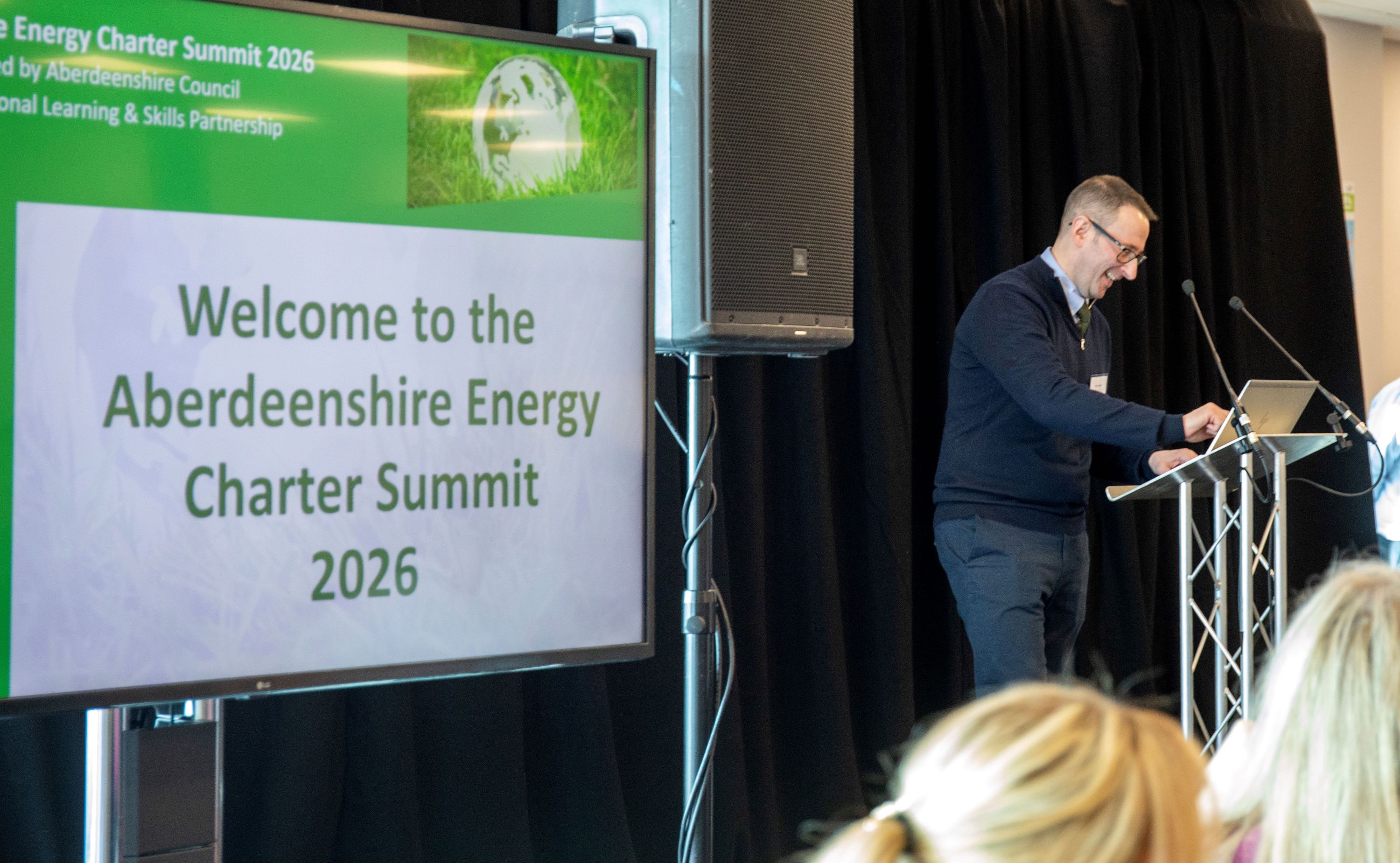
Paul Macari, Head of Planning and Economy at Aberdeenshire Council, addresses the Energy Charter Summit
The event was designed to support implementation of the Community Wealth Building Strategy and Energy Development Charter which Aberdeenshire Council has developed to influence energy development through the planning process.
The charter responds directly to National Planning Framework Policy 11 which requires developers to maximise net socio‑economic benefits arising from energy developments.
As co‑chairs of the Regional Learning and Skills Partnership, Allison Carrington of SDS and Robert Laird of NESCOL played a central role in delivering the summit, with SDS leading the skills‑focused sessions. Interactive workshops held throughout the day were lively, informative and well received, with attendees praising both the quality of discussion and the valuable networking opportunities.
A keynote address was given by the then Scottish Cabinet Secretary for Climate Action and Energy, Gillian Martin, who was impressed by the positive impression of the diversity and breadth of attendees and welcomed ongoing engagement around the outcomes and next steps from the summit.
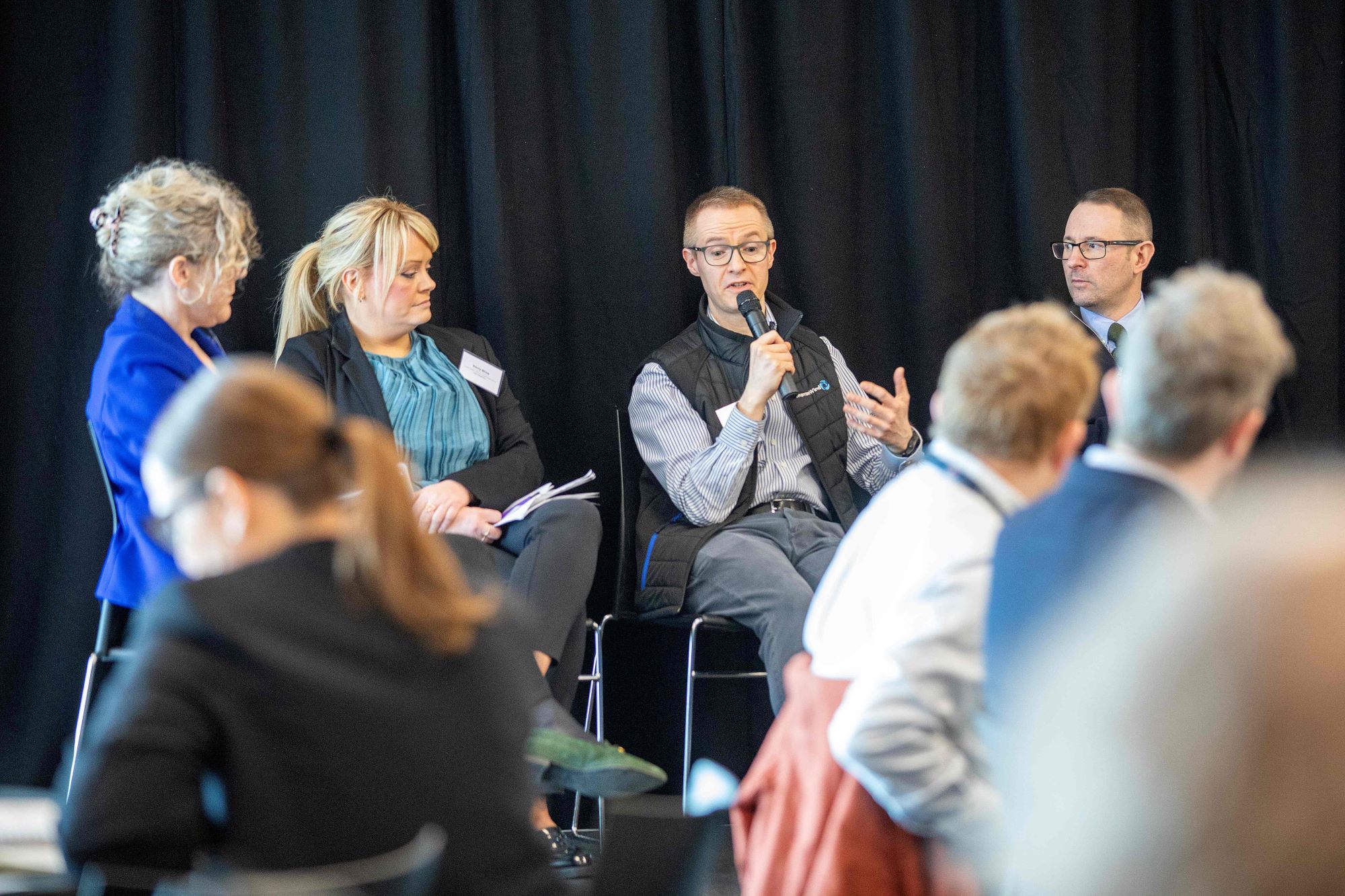
Participants included those from projects at every stage of development, from pre‑planning through to operation
Paul Macari, Head of Planning and Economy at Aberdeenshire Council, said: “The summit achieved its core aim of kick‑starting meaningful industry engagement by showcasing best practice, strengthening awareness of our Energy Development Charter and initiating detailed work on how the collaboration principles can be taken forward in practice. There was a particular focus on developing a long‑term skills collaboration principle, building on work already underway across the region.”
During the past year, Aberdeenshire Council’s Place Economy team has been working in partnership with SDS, Developing the Young Workforce (DYW), NESCOL and a small group of industry representatives to begin shaping this principle.
This work was further informed by recent ‘Workforce North’ skills events delivered by Highland Council and Moray Council, helping to create momentum and a clear set of early actions.
Mr Macari also emphasised the importance of alignment as the work moves forward, adding: “The Energy Development Charter Summit has demonstrated a clear appetite from industry to work collaboratively with public partners, laying strong foundations for delivering long‑term socio‑economic value from energy development across Aberdeenshire and the wider region.
“It is critical that the next stages of this work tie directly into the Regional Economic Strategy. We must also ensure coordination with national programmes including the DESNZ North Sea Transition Board to avoid duplication and maximise impact.”