Giant hogweed warning issued for Aberdeenshire
Aberdeenshire Council is reminding residents of the dangers of giant hogweed: an invasive, non-native species of plant that can make skin react violently to sunlight.
As the peak growing season continues, the council is urging residents to not remove or handle any suspected giant hogweed themselves. For plants on land that is managed or owned by the local authority, residents should only report the plant’s location so that fast and effective control measures can be undertaken.
To report an invasive plant species of plant such as Giant Hogweed, head to aberdeenshire.gov.uk/environment/invasive-plants
In case of accidental contact with giant hogweed sap...
-
Immediately protect the skin from sunlight,
-
Wash the affected area thoroughly with soap and water, and
-
Seek medical advice and do not expose the skin to sunlight for at least 48 hours.
Brushing against giant hogweed can release sap from its stems or leaf hairs, causing injury even if the plant tissue was not broken.
The plant’s clear sap makes skin extremely sensitive to the UV light. Contact with the sap followed by sunlight can cause redness, swelling, blistering, and deep burns.
The sap can soak into fabrics or remain on tools, later transferring to a person to cause severe skin burns from sap exposure.
The burn response is often painless at first, with blisters appearing 24–48 hours after exposure. The affected skin can remain highly sensitive to sunlight for months or even years, causing recurring pain and inflammation when exposed to UV light.
If giant hogweed sap gets into the eyes, it can cause temporary or even permanent blindness.
Left uncontrolled, giant hogweed forms dense, impenetrable stands—particularly along riverbanks. It can quickly take over, blocking wildflowers and vegetation and impacting biodiversity and river health.
Aberdeenshire Council cannot act on land that is not under its ownership or management. Private landowners also have a responsibility to prevent the spread of invasive non-native plant species and should strongly consider using specialist weed removal services to avoid accidental contact with giant hogweed.
If a reported plant is on land that Aberdeenshire Council does not manage, the council will try to pass the report on to other organisations that deal with plant control. This is done by working in close partnership with The Scottish Invasive Species Initiative (SISI) who are carrying out active control work on Aberdeenshire’s rivers. The local authority also shares records of invasive plants with the North East Scotland Biological Records Centre (NESBReC).
NESBReC is part of Aberdeenshire Council’s Environment & Sustainability Service. Its species data provides support for education and conservation bodies, national recording schemes and the wider community to assist with land use planning, conservation, site management, and research.
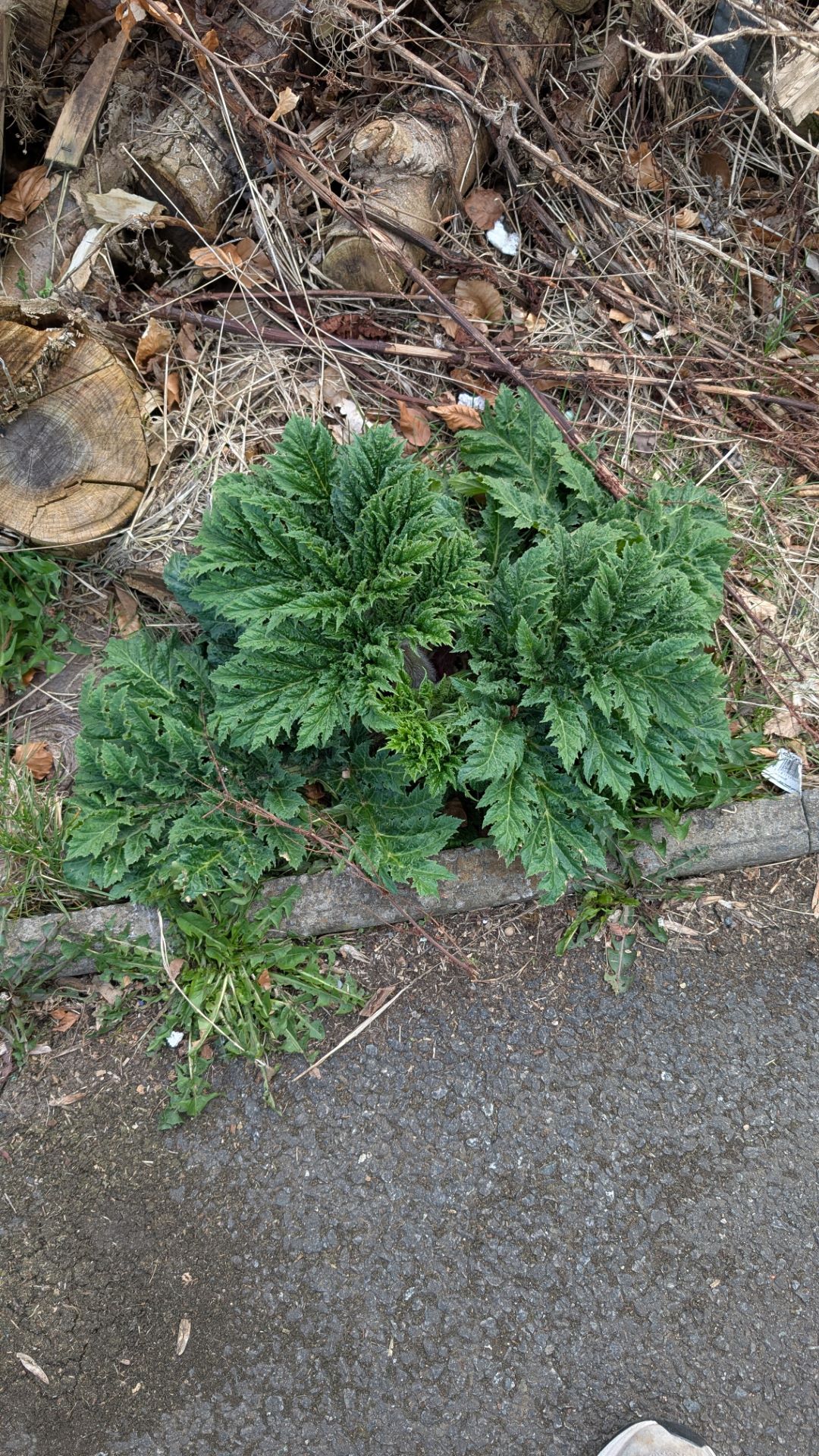
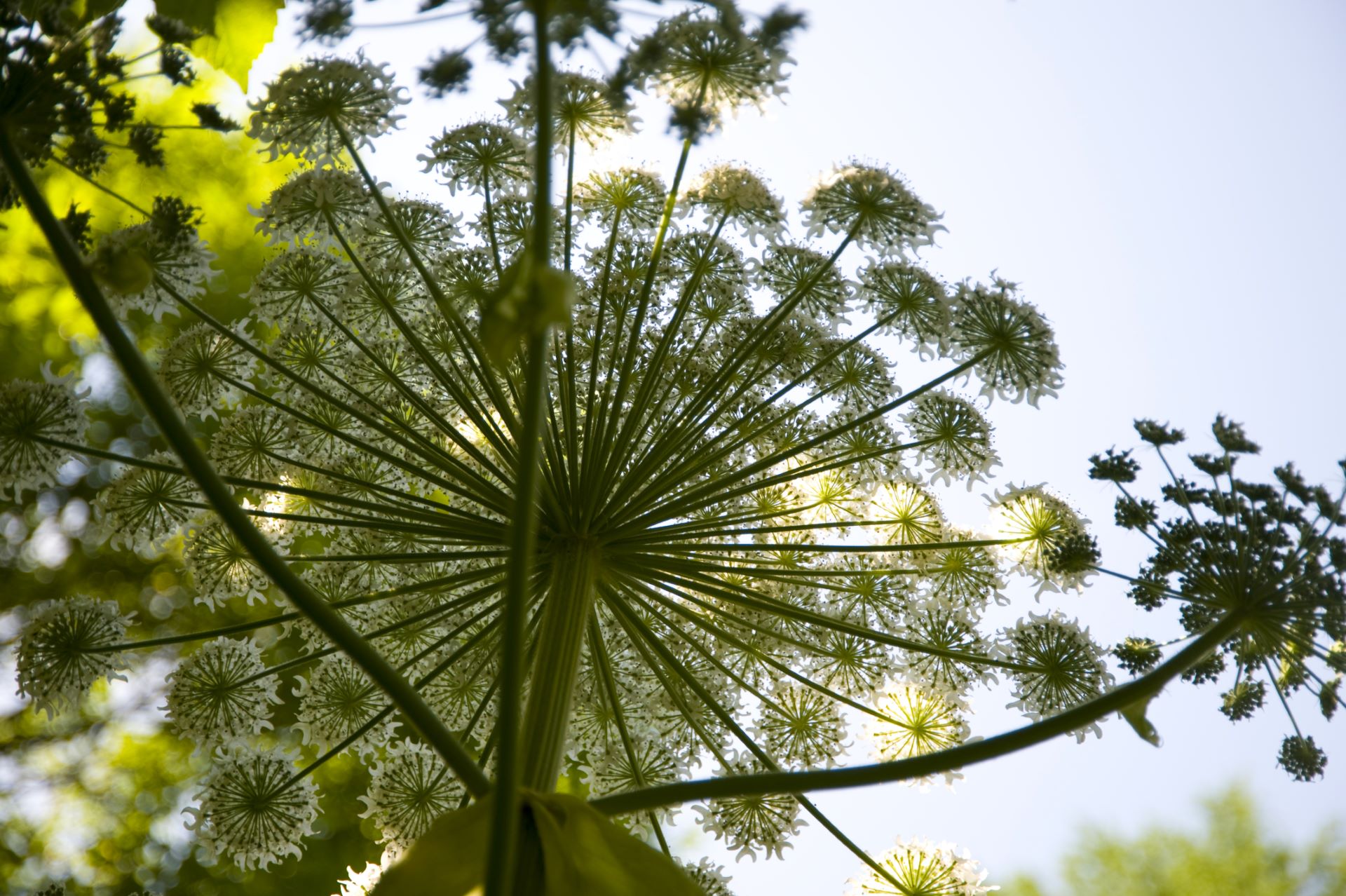
Pictured are a mature and a pre-flowering giant hogweed plant.