
Three million recordings of wildlife for The North East Scotland Biological Records Centre
The North East Scotland Biological Records Centre (NESBReC) has now collected more than three million records of wildlife sightings from experts and enthusiasts across the region.
NESBReC is part of Aberdeenshire Council’s Environment & Sustainability Service. Its species data provides support for education and conservation bodies, national recording schemes and the wider community to assist with land use planning, conservation, site management, and research.
Of all the sightings of species recorded on NESBReC’s database—covering Aberdeenshire, Aberdeen City, Angus, Moray, and the Cairngorms National Park—it was a lizard (specifically Zootoca vivipara) that featured in the three millionth record.
Information for the three millionth record was sent by Liz Bracegirdle, who spotted and photographed the lizard as it basked on a pottery urn in Slewdrum near Potarch.
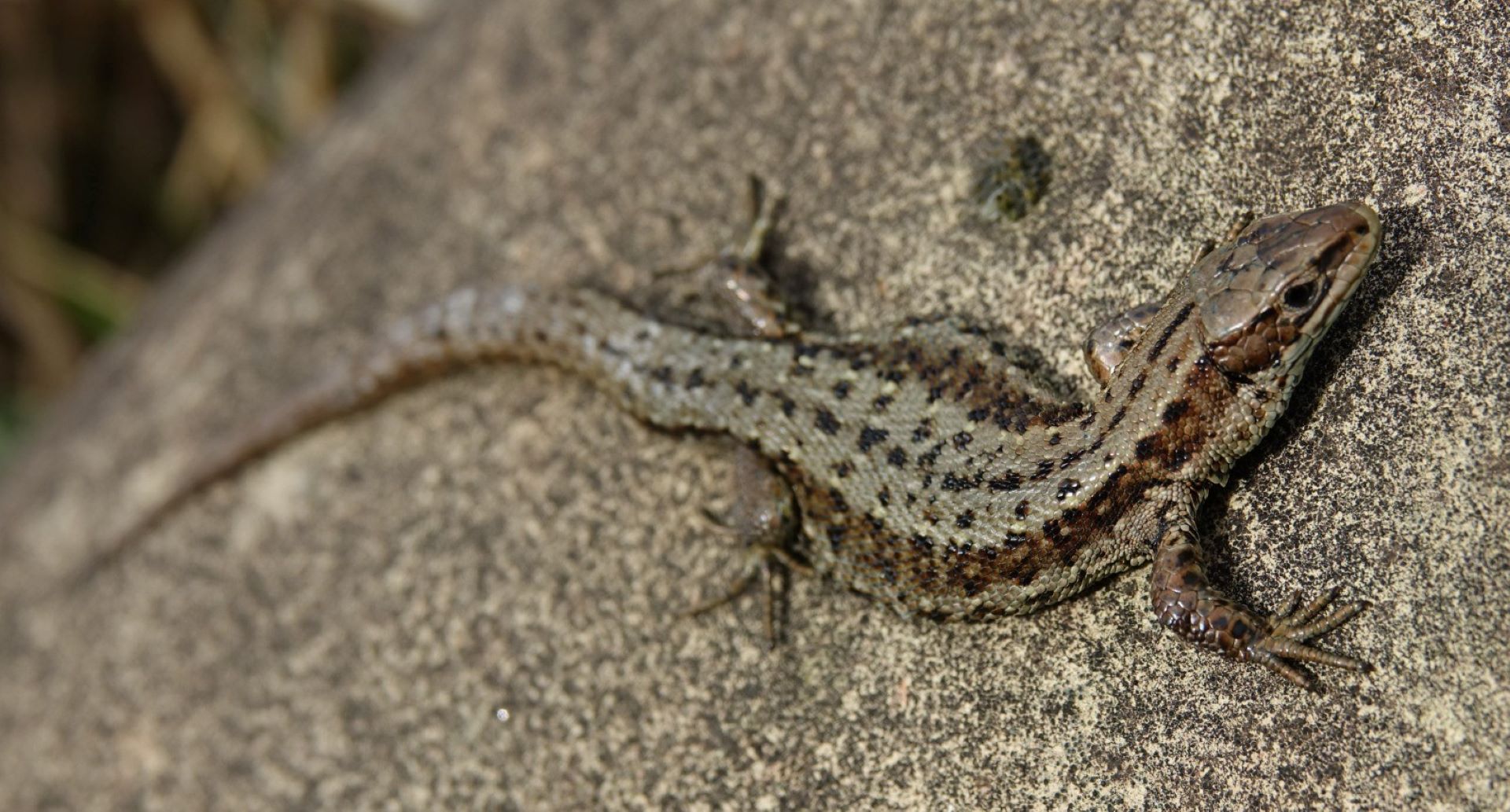
Zootoca vivipara lizards typically hibernate between October and March but, when they are active, they thermo-regulate by basking in the sun. Once suitably warmed up, they can move very quickly, helping them hunt for invertebrates in the undergrowth.
As the name Zootoca vivipara suggests, they are viviparous, meaning they give birth to live young. In the North East of Scotland they are found in a wide range of habitats from coastal cliffs, stone walls, open woodland, heath and hills, relying on sunny locations with dense cover nearby to avoid predators.
Chair of Aberdeenshire Council’s Sustainability Committee Cllr Sarah Dickinson said: “A massive thank you to everyone who has helped NESBReC reach this significant milestone. It is yet another example of what can be achieved when residents and the council work together for the benefit of the region. Every single record supports a data led approach to tackling the climate and nature crisis—which is critical in developing future action plans—and your help with NESBReC allows us to do that.”
Chair of the council’s Infrastructure Services Committee Cllr Alan Turner said: “Aberdeenshire values its open spaces and the work of NESBReC allows developers to best consider how to create new infrastructure in the most nature-sensitive way by building in mitigations and adapting their proposals. This only happens with the wide support we receive from residents, experts, and enthusiasts from across Aberdeenshire, and my thanks go to each of you for helping us transform those individual efforts into this massive, data-driven resource of three million records and counting.”
Information can be submitted via NESBReC’s website or by sending a simple email to nesbrec@aberdeenshire.gov.uk with details of what was seen, where it was seen, and when.
Everyone is welcome to share information with NESBReC to be turned into a record on the database and there is no need for it to be a rare or uncommon sighting. For example, hedgehogs and common toads are experiencing declines in their population, making their continued sightings important information to record.
Wildlife records are maintained by NESBReC, part of Aberdeenshire Council. NESBREC depends on financial support from a range of organisations, including public bodies, local authorities, and conservation charities including Angus Council, Aberdeen City Council, Bailies of Bennachie, Nature Scot, Scottish Forestry, and Cairngorms National Park Authority.
Visit nesbrec.org.uk to learn more or to submit a record.
Photos of a Zootoca vivipara by Liz Bracegirdle.